



Makita ST112D Review: A Japanese DIYer's Perspective on This Pro-Grade RT Wire Stapler
maki-dy-ad
makita-diy
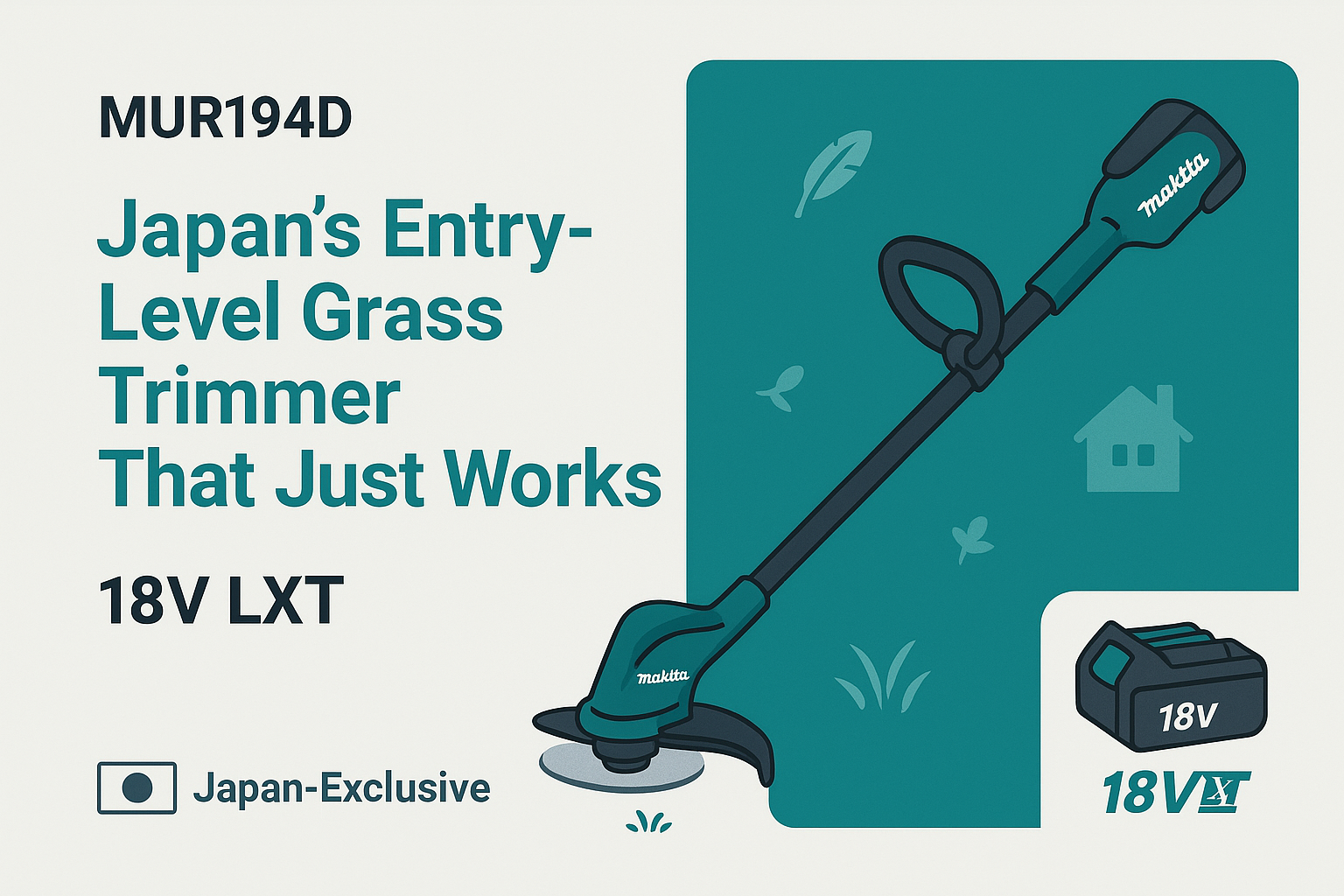
xAs a Japanese DIYer who’s spent years maintaining my modest suburban garden, I’ve learned that expensive doesn’t always mean better. When makita released the MUR194D in 2022, I was skeptical. Could a budget-priced cordless grass trimmer really handle Japanese summers where weeds seem to grow overnight? After two seasons of use, I’m here to share why this unassuming tool has become my go-to for yard maintenance.
The makita MUR194D represents something increasingly rare in today’s power tool market: honest value. While American and European markets chase higher voltages and premium features, makita created this model specifically for Japanese homeowners who need reliable performance without breaking the bank.
In Japan, makita isn’t just a brand—it’s the brand. Walk into any hardware store from Hokkaido to Okinawa, and you’ll see makita’s distinctive teal color dominating the shelves. The MUR194D continues this legacy by offering what Japanese consumers value most: reliability, quietness, and practical design at a price point that makes sense for weekend warriors.
This review comes from real-world use across multiple seasons, tackling everything from delicate lawn edges to stubborn bamboo grass. I’ll share what makes this trimmer special, where it falls short, and whether it’s the right choice for your needs.
This review covers the Japanese model MUR194D. Here’s what you need to know about international availability:
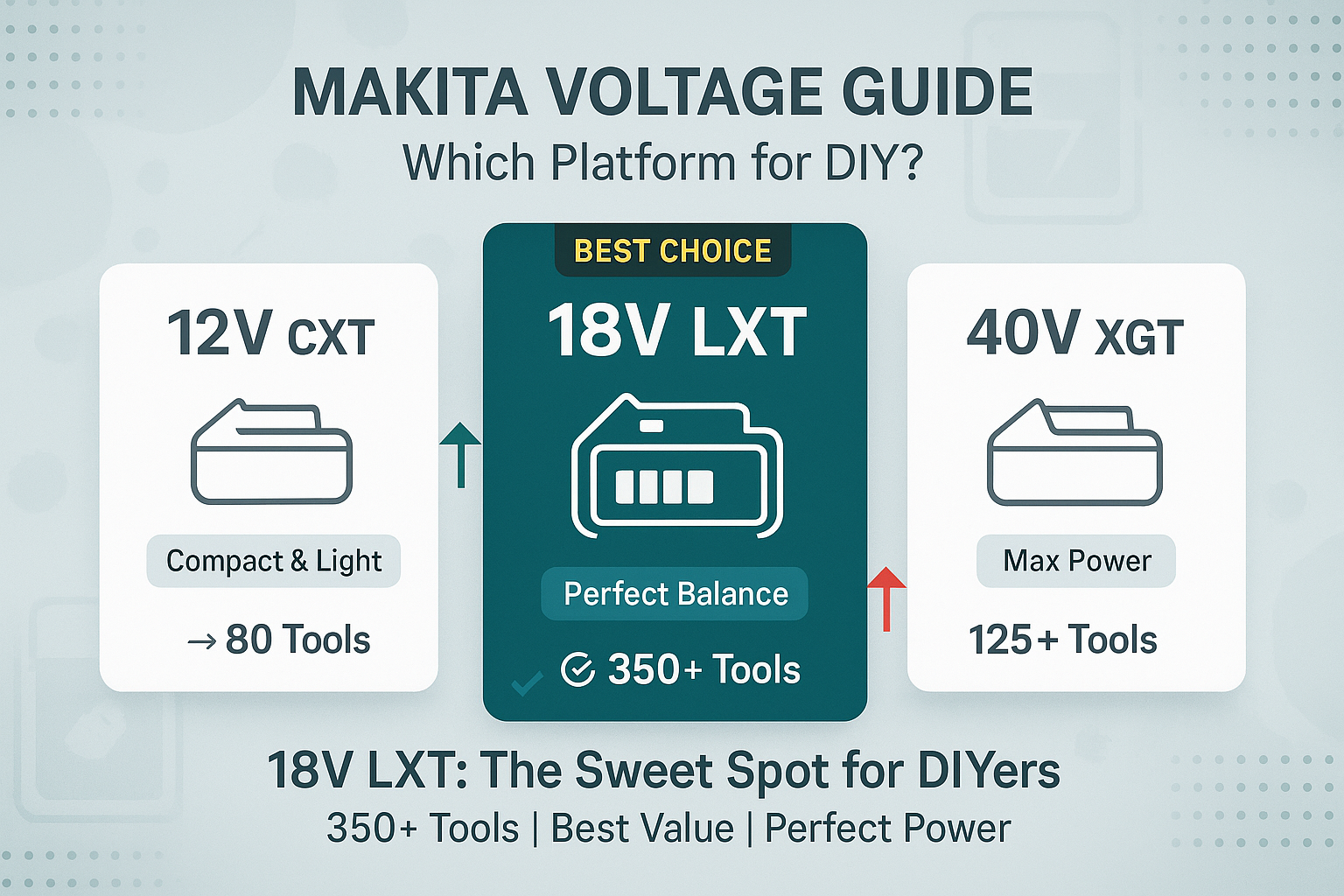
✅ Battery: Compatible (18V LXT platform, 350+ tools worldwide)
⚠️ Charger: NOT compatible (100V Japan vs 120V USA vs 230V Europe)
❌ Warranty: Region-locked (Japan warranty only valid in Japan)
✅ Specs: Battery voltage identical across regions (18V nominal)
🇯🇵 Japan: MUR194D is widely available through Amazon.co.jp, Rakuten, and local hardware stores. This is a Japan-exclusive model designed specifically for the domestic market.
🇺🇸 USA Alternative: The MUR194D is not sold in the United States. The closest equivalent is the XRU23Z (18V LXT Brushless, 13″ cutting width, nylon line). However, this is a different tool with brushless motor technology and nylon line instead of metal blade.
🇪🇺 Europe Alternative: The DUR181Z is available in Europe but uses a different design (nylon line, 260mm cutting width, telescoping shaft).
The MUR194D’s defining feature—its 200mm metal blade—isn’t common in Western markets where nylon line trimmers dominate. This reflects different gardening cultures: Japanese gardens often feature tougher grasses like bamboo grass and zoysia that benefit from metal cutting.
Important: If you’re reading this from outside Japan and already own makita 18V LXT batteries, they will work with the MUR194D if you can source one through import. However, you’ll need a voltage converter for the charger or purchase a region-appropriate charger separately.

⭐⭐⭐⭐☆ 4.2/5
Best for: Homeowners with small to medium gardens (up to 150 sqm), budget-conscious DIYers, first-time cordless tool buyers
Price Segment: Budget/Entry-Level
Battery Platform: 18V LXT (350+ compatible tools)
Bottom Line: The MUR194D sacrifices some power and features to hit an aggressive price point, but it delivers where it counts—reliable cutting performance for typical home garden maintenance. Not for professionals or large properties, but perfect for weekend yard work.
The MUR194D sits at the entry level of makita’s grass trimmer lineup, positioned as a value model for homeowners who don’t need professional-grade power. Released in March 2022, it fills a gap in the market for genuinely affordable cordless trimmers that don’t compromise on build quality.
Motor & Performance
Cutting System
Physical Dimensions
Battery & Runtime
Build & Protection
The MUR194D comes in several configurations:
Standard accessories include: shoulder strap, 8-tooth metal blade, blade cover, protective eyewear, hex wrench, accessory bag.
One of the MUR194D’s strongest selling points isn’t the trimmer itself—it’s access to makita’s massive 18V LXT ecosystem. Understanding this platform is crucial to appreciating the tool’s true value.
The 18V LXT (Lithium-ion Xtreme Technology) platform launched in 2005, making it the longest-running 18V lithium-ion system in the industry. Today it includes over 350 tools spanning construction, woodworking, gardening, and even outdoor recreation.
Why This Matters: Buy the MUR194D today, and your battery works with everything from impact drivers to coffee makers. This isn’t marketing fluff—it’s genuine convenience. My single 6.0Ah battery rotates between this trimmer, my DHP484 drill, and DCL182 flashlight throughout a typical weekend.
For the MUR194D specifically:
3.0Ah (BL1830B) – Standard Choice
5.0Ah (BL1850B) – Sweet Spot
6.0Ah (BL1860B) – Maximum Power
My Recommendation: Start with 3.0Ah if you’re buying your first kit. The weight savings keep the trimmer nimble. If you already own 5.0Ah or 6.0Ah batteries for other tools, they’ll work fine but expect slightly more fatigue in extended use.
Here’s something crucial: makita 18V LXT batteries are globally compatible. A battery purchased in Tokyo works perfectly in New York or London. The 18V nominal voltage is standard worldwide.
However, chargers are NOT compatible:
If you’re importing a Japanese MUR194D to the US, you can use your existing US-market makita 18V batteries, but you’ll need to keep your US charger for those batteries.
Newer makita batteries (those marked with a ⭐ star symbol) include enhanced electronics that communicate with compatible tools. The MUR194D supports this system, providing:
This intelligent system is why makita batteries consistently outlast competitors despite similar capacity ratings.
The MUR194D may be an entry-level tool, but it carries makita’s reputation for Japanese engineering. Here’s what sets it apart:
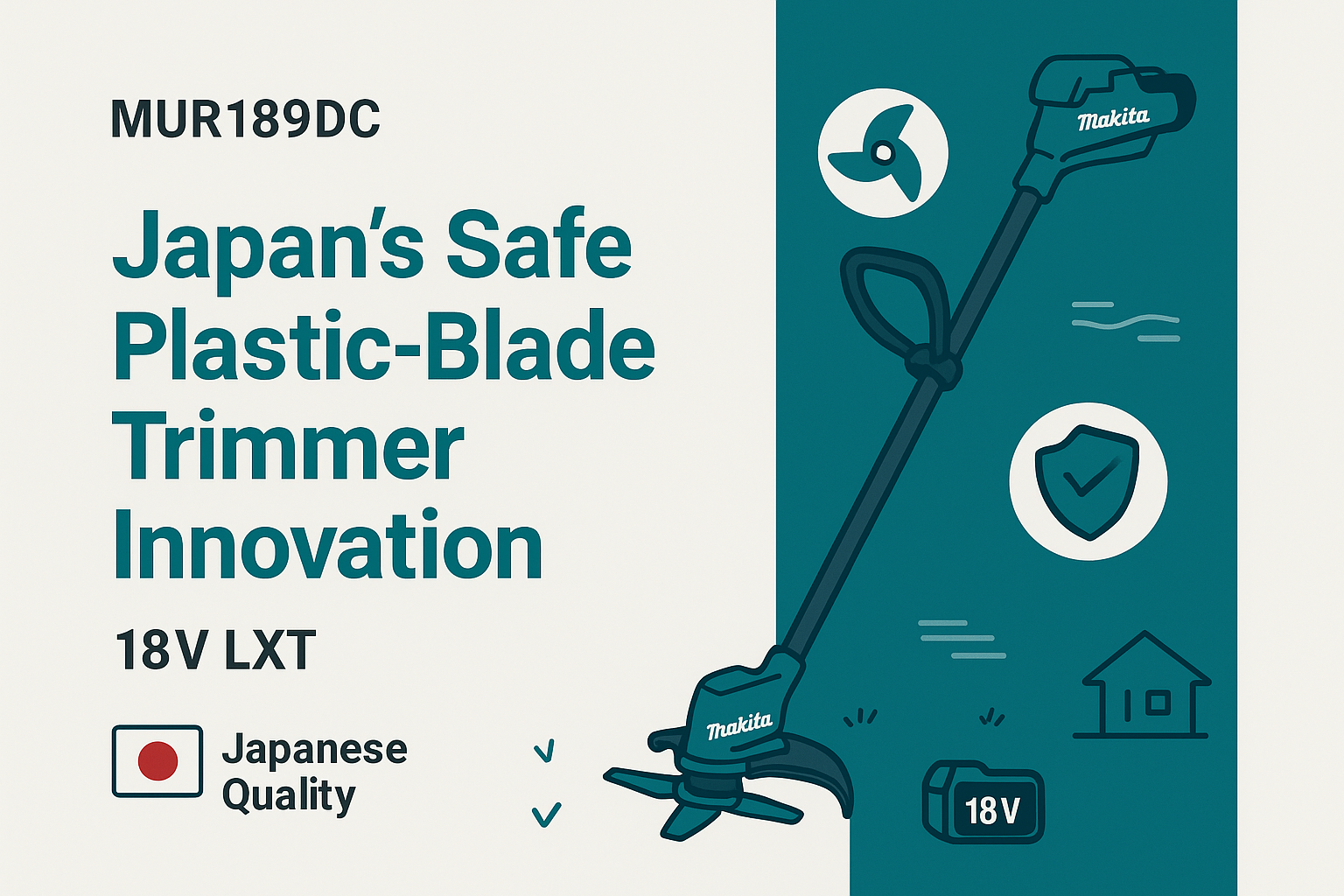
Unlike Western trimmers that often place motors at the rear, the MUR194D uses direct-drive with the motor at the cutting head. This simplifies the design (fewer moving parts = less to break) and increases cutting efficiency (no power loss through drive shafts).
Trade-off: Front weight bias makes the trimmer feel heavier than it is. You’ll adapt within 10-15 minutes, but it’s noticeably different from shaft-driven models.
The 200mm 8-tooth chip saw is the tool’s defining feature. In my experience:
Excels at:
Struggles with:
Japanese gardens often feature mixed plantings with aggressive grasses like zoysia and bamboo grass. Nylon line simply slaps these plants without cutting cleanly. The metal blade cuts through first pass, leaving clean edges that heal better.
Safety Note: The blade demands respect. Always wear the included safety glasses and long pants. I’ve seen the blade throw small stones 5+ meters.
makita’s APT designation means the tool has enhanced sealing against water and dust intrusion. For a grass trimmer that works in morning dew and kicks up debris, this matters.
After two rainy seasons, my MUR194D shows zero corrosion. I’ve never babied it—just a quick wipe-down after use and proper battery removal. This durability is quintessentially makita.
High speed (6,500 RPM): Maximum cutting power for thick grass and overgrown areas
Low speed (5,000 RPM): Precision work, reduced battery drain, quieter operation
The speed switch is thumb-operated and easy to toggle mid-work. I typically start in high gear to establish the cut line, then drop to low for finishing work. This extends battery life noticeably—perhaps 15-20% more runtime.
The adjustable loop handle accommodates different body heights and working styles. I’m 170cm tall, and I set the handle forward with a slight downward angle. My neighbor (185cm) uses the same tool with the handle further back and more level.
Tip: Spend 10 minutes adjusting the handle and shoulder strap before your first real session. Proper setup reduces fatigue dramatically.
At 2.5kg body weight, the MUR194D is genuinely light. My wife (who finds most power tools intimidating) uses this regularly without complaint. The compact size also makes it easier to store in our limited garage space.
This trimmer was designed for Japanese gardens, which tend to be:
If your property and maintenance schedule match this profile, the MUR194D is perfectly calibrated. If you’re cutting American suburban lawns, you might find it underpowered.
Let me share how the MUR194D performs in actual scenarios:
Task: Edge trimming around 40m of fence line, 15m of pavement edges, spot cutting around 6 trees and 3 garden beds.
Battery: 3.0Ah
Result: Completed with 30% battery remaining. Low speed sufficient for most work. Total time: 25 minutes.
Observation: This is the trimmer’s sweet spot. Regular maintenance of well-managed areas is effortless. The metal blade leaves cleaner cuts than my neighbor’s nylon line trimmer, so grass edges look sharper longer.
Task: Two-week vacation left grass and weeds seriously overgrown (20-30cm height). Mixed vegetation including tough bamboo grass.
Battery: 5.0Ah
Result: Cleared 80 sqm in two battery charges. High speed necessary throughout. Some areas required two passes.
Observation: The brushed motor struggles a bit in continuous heavy use—it gets warm and occasionally bogs down in the thickest patches. A 30-second pause lets it recover. Still completed the job, but a brushless model (MUR190/195) would maintain power better.
Task: Clearing bamboo grass runner shoots along property boundary (notorious invasive species in Japan).
Battery: 3.0Ah
Result: Metal blade cut through shoots up to 5mm diameter easily. Thicker shoots (7mm+) required multiple passes or foot pressure to complete the cut.
Observation: This is where the metal blade justifies itself. Nylon line would be useless here. The blade dulls noticeably after heavy bamboo work, so I keep a spare blade ready.
Task: Trimming grass edges around established perennial bed with decorative rocks.
Battery: 3.0Ah (low speed)
Result: Completed but required careful technique. The 200mm blade width makes precise work challenging.
Observation: The compact guard means debris hits your legs and shoes. Wear boots. The fixed shaft length (non-telescoping) requires bending for low work—my back noticed after 20 minutes.
Task: My 72-year-old mother borrows this for her small courtyard garden (50 sqm).
Battery: 3.0Ah
Result: She completes maintenance in one session without fatigue complaints.
Observation: This is where the MUR194D’s lightweight design shines. She previously used a corded electric trimmer but found cord management frustrating. The cordless freedom, combined with the light weight and simple two-speed operation, makes this accessible for older users.
After extended real-world use, here’s the honest assessment:
Genuine Value: Delivers 80% of the performance of models costing twice as much. The price-to-performance ratio is exceptional for homeowners with modest needs.
18V LXT Ecosystem: One battery platform for 350+ tools. This ecosystem advantage compounds over time as you add more makita tools.
Lightweight & Manageable: At 2.5kg, it’s easy to control and reduces fatigue. My wife and teenage daughter both use it comfortably.
Quiet Operation: Noticeably quieter than gas trimmers. I can work at 7 AM without annoying neighbors—something impossible with my old two-stroke engine trimmer.
Metal Blade Effectiveness: Cuts thick weeds and grass cleanly in one pass. The 8-tooth blade handles Japanese tough grasses better than any nylon line.
Reliable Japanese Quality: makita’s build standards mean this inexpensive tool still feels solid. No flex in the shaft, quality plastics, durable construction.
Low Maintenance: No gas mixing, no spark plugs, no carburetor cleaning. Wipe it down, remove the battery, done.
Front-Heavy Balance: Motor at the cutting head creates obvious weight bias. You adapt, but it never feels as balanced as rear-motor designs.
Brushed Motor Limitations: Gets warm in extended use, occasionally bogs down in thick grass, less efficient than brushless alternatives. This is the cost compromise for the low price.
Small Cutting Diameter: 200mm blade limits productivity in large areas. You’ll make more passes than with 230mm or 255mm models.
Fixed Shaft Design: Non-telescoping shaft won’t suit all heights perfectly. Taller users might want more length.
Compact Guard Design: Small debris shield means more grass clippings hit your legs. Wear long pants and boots.
Two-Speed Only: Some competitors offer variable speed triggers or three-speed operation for more control. High/Low is simple but limiting.
No Edge Mode: The tool doesn’t convert to an edger position like some Western models. You work it at angles manually.
Understanding where the MUR194D sits in the market helps clarify if it’s right for you.
MUR194D (This Model) – Budget Entry
Price segment: Lowest
Motor: Brushed
Blade: 200mm
Best for: Small gardens, occasional use
MUR190/191 – Mainstream Choice
Price segment: Mid-range
Motor: Brushless
Blade: 230mm
Features: 3-speed + auto mode
Best for: Regular use, medium-large gardens
MUR195 – Professional Grade
Price segment: Premium
Motor: Brushless (rear-mounted)
Features: Variable speed lever, superior balance
Best for: Professional use, all-day operation
My Take: If you trim weekly and have under 200 sqm of garden, the MUR194D is sufficient. For anything more demanding, save up for the MUR190—the brushless motor alone justifies the premium.
Milwaukee’s M18 string trimmer offers:
Verdict: Milwaukee is the better tool, but costs significantly more. If you’re already on Milwaukee’s platform and do frequent yard work, it’s worth it. For occasional homeowner use, the makita offers better value.
DeWalt’s FlexVolt trimmer provides:
Verdict: DeWalt has power but the battery situation frustrates users. The MUR194D’s honest performance might be preferable to overpromised specs.
Ryobi occupies similar budget territory:
Verdict: For pure value, Ryobi competes. But makita’s reputation for durability and the metal blade option give the MUR194D an edge for Japanese-style gardens.
In Japan, the MUR194D competes primarily against other makita models and a few domestic brands. The lack of metal blade options in Western markets means there’s no perfect equivalent abroad—different tools for different gardening cultures.
If you’re comparing across regions: The MUR194D’s unique value proposition (metal blade + LXT platform + budget pricing) doesn’t exist in quite the same form outside Japan.
The MUR194D isn’t for everyone. Here’s who benefits most:
First-Time Cordless Tool Buyers: If this is your entry into makita’s 18V LXT ecosystem, it’s an affordable gateway. The battery and charger (in kit form) work with 350+ other tools.
Small Garden Homeowners: Properties under 200 sqm with regular maintenance schedules. The tool’s limitations don’t matter when areas are manageable.
Elderly or Less-Strong Users: The lightweight design and simple operation make this accessible for older adults or those who find heavy tools difficult.
Budget-Conscious DIYers: Maximum value for minimum investment. You sacrifice some features but get reliable performance.
Existing makita 18V LXT Owners: If you already have batteries and chargers, buying the body-only version is a no-brainer for occasional trimming needs.
Japanese Garden Styles: Mixed plantings with tough grasses like zoysia, bamboo grass, or heavily planted yards benefit from the metal blade.
Professional Landscapers: The brushed motor and limited runtime won’t survive daily commercial use. Invest in MUR190/195 or professional-grade alternatives.
Large Property Owners: If you’re maintaining 500+ sqm or American-style large lawns, the small blade and modest power become significant limitations.
Weekly Heavy Duty Users: Thick brush, constant overgrowth, or demanding conditions exceed this tool’s design parameters.
Those Wanting Professional Features: No brushless motor, no variable speed, no attachment system, basic guard. If you want premium features, buy a premium tool.
Western-Style Lawn Maintenance: Open grass lawns without mixed plantings might be better served by wider nylon line trimmers designed for that specific use case.
After two years with the MUR194D, I’ve developed a nuanced appreciation for what makita achieved here. This isn’t a tool trying to be everything to everyone—it’s a focused solution for a specific customer: the Japanese homeowner with a modest garden and modest budget.
The brushed motor means it’s not cutting-edge technology. The 200mm blade means it’s not the fastest option. The entry-level positioning means it lacks premium features. And yet, it works. Week after week, season after season, it completes the job without drama.
In a market obsessed with specifications and feature lists, the MUR194D succeeds through honest competence. It’s the tool equivalent of a reliable Honda Fit—not exciting, but you’re glad you own it when you need it.
For fellow Japanese DIYers, this trimmer understands our gardens. The metal blade handles our tough grasses. The compact size fits our limited storage. The quiet operation respects our close-proximity neighborhoods. The makita quality means it’ll still work five years from now.
If you’re reading this from outside Japan and considering importing one: understand that you’re buying a tool optimized for Japanese conditions. It will work elsewhere, but regional alternatives might suit your specific needs better.
My recommendation: If your situation matches the ideal buyer profile above, buy the MUR194D with confidence. It won’t dazzle you with innovation, but it will quietly become one of your most-used tools. Sometimes that’s exactly what you need.
For the Japanese market, the MUR194D represents makita at its best—delivering practical quality at honest prices. That’s a tradition worth supporting.
This review reflects genuine personal experience with the makita MUR194D in Japanese garden conditions. Your results may vary based on grass types, garden layout, and usage patterns. Always follow manufacturer safety guidelines and wear appropriate protective equipment.